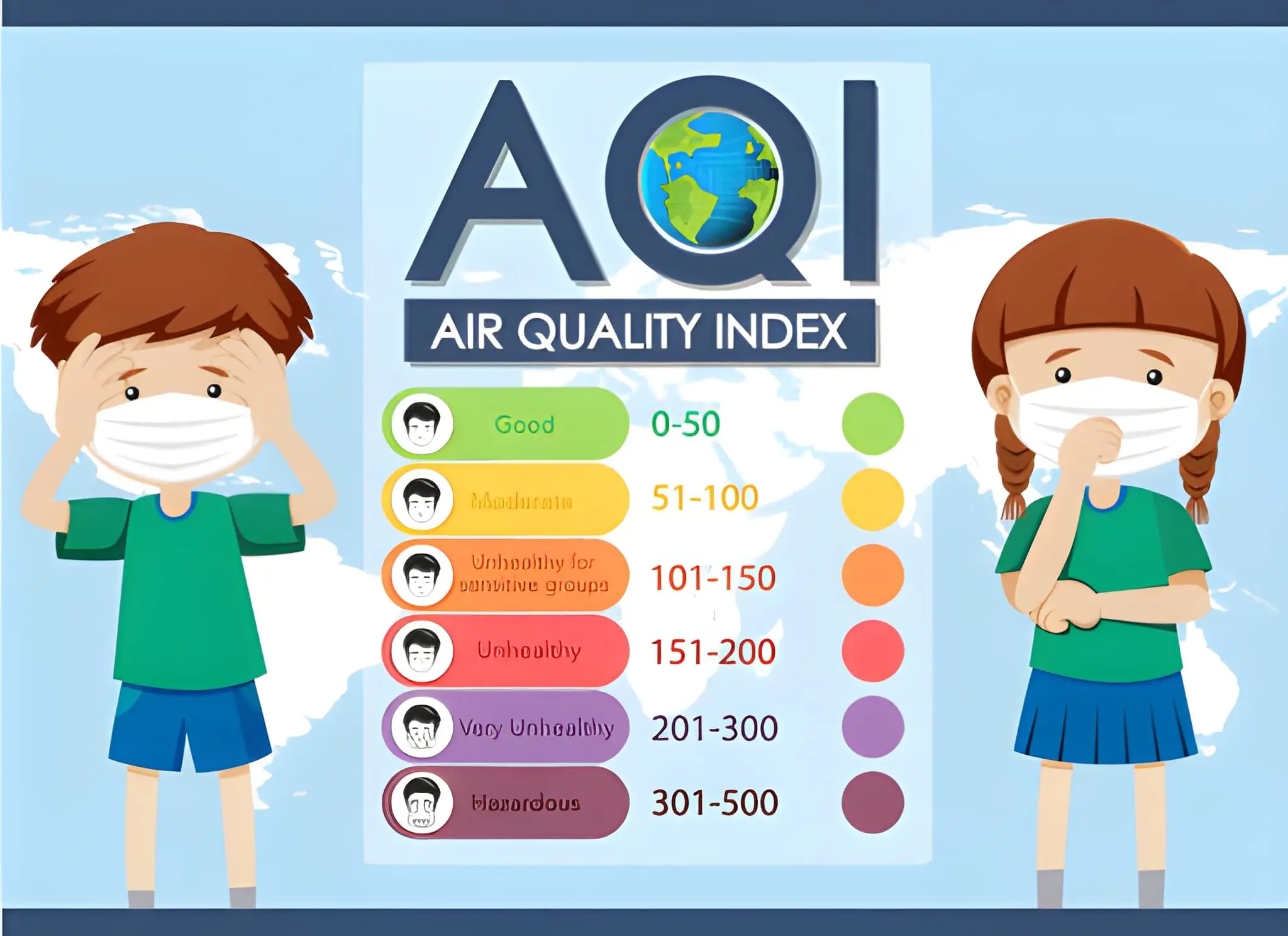
The Air Quality Index (AQI) is a simple, standardized scale that tells you how clean or polluted the air is—and what that means for your health. Whether you’re stepping outside for a walk, sending kids to school, or planning outdoor work, AQI helps you understand the level of pollution in the air so you can make safer, healthier choices every day.
What Is AQI?
The Air Quality Index (AQI) is a numerical system used worldwide to measure and communicate air pollution levels. It converts complex air pollution data into a single number and color code, making it easy for anyone to understand the current air quality at a glance. The higher the AQI value, the more polluted the air is and the greater the health concern.
Why AQI Matters
Air pollution affects everyone—from young children and the elderly to people with asthma, heart issues, or allergies. AQI helps individuals, schools, workers, and city planners make informed decisions such as:
- Whether it’s safe to exercise outdoors
- If children should play outside
- When to use masks or air purifiers
- When sensitive groups should stay indoors
- How cities plan traffic or industrial activities
AQI turns scientific pollution data into practical guidance for daily living.
Pollutants Measured by AQI
AQI is typically calculated using five major pollutants regulated by environmental agencies:
- PM2.5 – Fine particulate matter that penetrates deep into the lungs
- PM10 – Larger dust particles
- Ozone (O₃) – Formed when heat and sunlight react with pollutants
- Nitrogen Dioxide (NO₂) – Mainly from vehicle emissions
- Sulfur Dioxide (SO₂) – Produced by industries and power plants
- Carbon Monoxide (CO) – From incomplete fuel combustion
The pollutant with the highest individual index value on any day determines the final AQI.
AQI Scale and Its Meaning
Most AQI systems use a scale from 0 to 500, along with color codes:
| AQI Range | Color | Air Quality | Health Impact |
|---|---|---|---|
| 0–50 | Green | Good | Minimal impact |
| 51–100 | Yellow | Moderate | Acceptable; mild risk for sensitive groups |
| 101–150 | Orange | Unhealthy for sensitive groups | May cause symptoms in asthma/pregnancy/elderly |
| 151–200 | Red | Unhealthy | Everyone may feel discomfort |
| 201–300 | Purple | Very Unhealthy | Health warnings; avoid outdoor activity |
| 301–500 | Maroon | Hazardous | Severe health risks for all |
How AQI Is Calculated
Air monitoring stations measure the concentration of pollutants in real time. These values are fed into a formula that converts pollutant levels into an index number. The highest pollutant index becomes the AQI for that location.
Sources of Poor AQI Levels
Several human-made and natural factors can cause unhealthy AQI:
- Vehicle emissions
- Industrial pollution
- Construction dust
- Crop burning
- Wildfires
- Lack of wind or weather changes trapping pollutants
- High temperatures increasing ozone
Urban areas typically show higher AQI due to traffic and industrial activity.
How to Protect Yourself on High AQI Days
When the AQI rises above safe levels, you can reduce exposure by:
- Limiting outdoor activities
- Using N95/KN95 masks
- Running air purifiers indoors
- Keeping windows closed
- Staying hydrated
- Checking air quality apps regularly
Sensitive groups—children, elderly people, pregnant women, and those with respiratory issues—should be especially cautious.
Conclusion
The Air Quality Index is a vital everyday tool that makes understanding pollution simple and accessible. By checking the AQI regularly, you can protect your family’s health, make smarter decisions about outdoor activities, and stay informed about environmental conditions that impact long-term well-being.
Also Read-5 BEST Digital Photo Frames of 2026 – Full Review & Buying Guide